Schools news: phones to be kept inaccessible all school day as Ofsted publishes its first year of report card grades (14 November 2026)
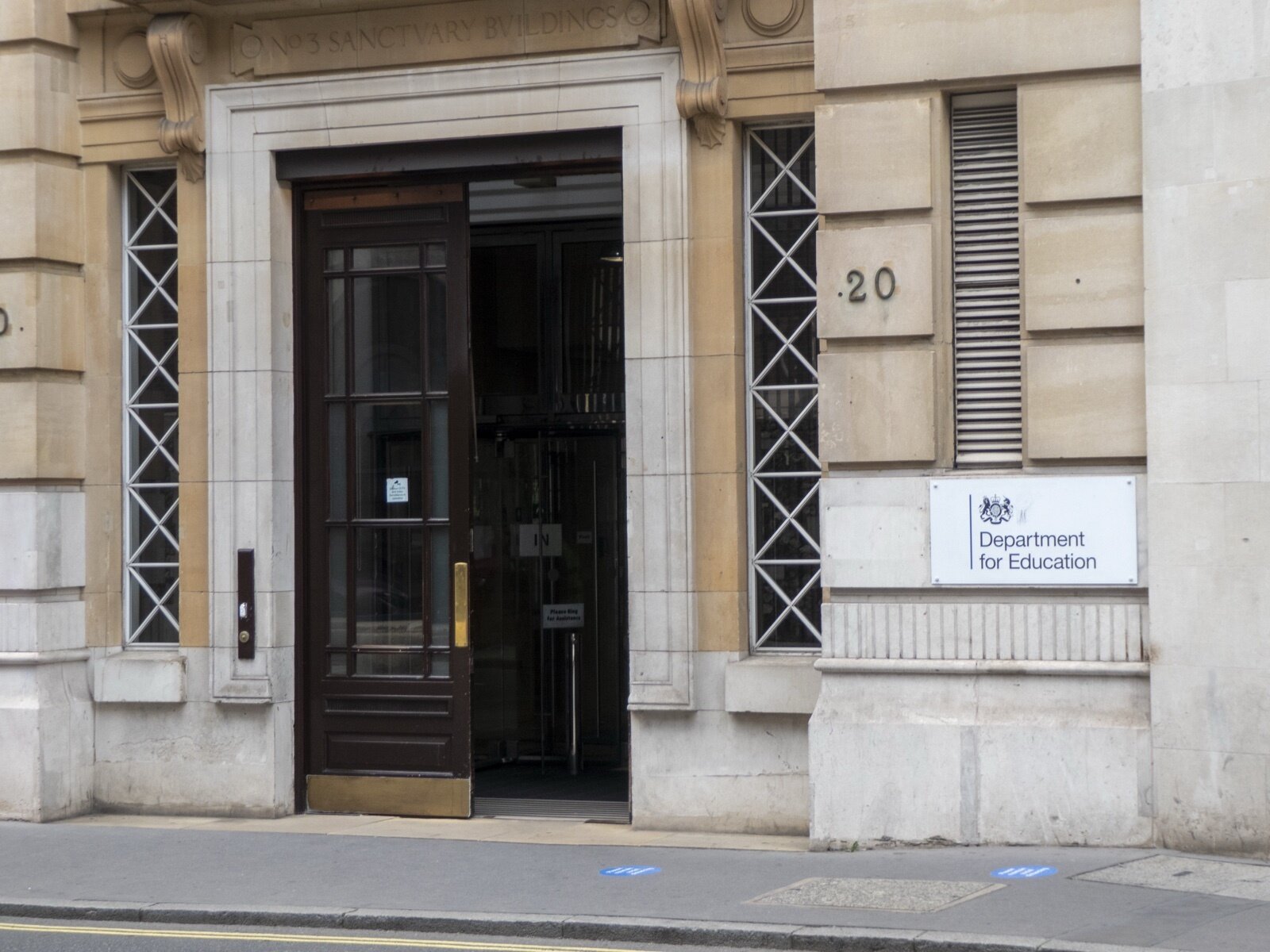
The Department for Education spent the fortnight on the shape of the school day: tougher phone guidance, a three-year key stage 3 and a new public profile for every school. Ofsted published the first full-year figures under report cards, and two consultations opened on children not in school and on safety certification for EdTech and AI products.
Phone guidance will tell schools to go beyond 'not seen, not heard'
The DfE said on 10 November that strengthened mobile phone guidance will make clear schools should go beyond letting phones sit in pupils' bags and adopt whole-school approaches that keep phones out of use and inaccessible throughout the school day. Lockable pouches, collection at the start of the day, secure storage and banning phones from the site are given as examples schools already use.
The department cited its finding that only 16% of secondary pupils say phone rules are followed all of the time. Education Secretary Lucy Powell said children should not be using smartphones "at any point during the school day, full stop". The release did not give a date for the revised guidance. On the same day the DfE opened a consultation on a safety certification scheme for EdTech and AI products used in schools, which runs until 4 February 2027.
Sources: Department for Education, 10 November 2026, Department for Education consultation, 10 November 2026.
Ofsted's first report card year: 72% of schools at expected standard or better for achievement
Ofsted's statistics for the first year of the renewed inspection framework, published on 10 November, cover 3,262 inspections between 10 November 2025 and 31 August 2026, of which 3,188 were full inspections. The share of schools graded 'expected standard' or better was 95% for personal development and wellbeing, 90% for inclusion, 85% for leadership and governance, 84% for attendance and behaviour, 78% for curriculum and teaching and 72% for achievement.
In 37% of inspections a school had at least one area graded 'urgent improvement' or 'needs attention'. Safeguarding standards were not met in 18 schools (0.6%), 4% were graded 'exceptional' in at least one area and 11 schools were exceptional in every area. Ofsted warns that the 3,188 full inspections cover only 15% of state-funded schools and lean towards lower-performing schools, so the profile is not representative of all schools.
Source: Ofsted, 10 November 2026.
Key stage 3 to become a distinct three-year phase, with no early GCSE starts for large cohorts
The DfE announced on 8 November that the new national curriculum, due to be published in full later this year, will restore key stage 3 as a distinct three-year phase. Schools will be told not to start GCSE specifications early for large cohorts, not to routinely make pupils narrow their options early and not to enter them for exams early, though teachers can still stretch high-achieving pupils.
The department pointed to persistent absence nearly doubling between Years 7 and 9 to one in four pupils, and to research for the International Baccalaureate finding that more than half of teachers say GCSE courses dominate the first three years of secondary school.
New school profiles put attendance, results and breakfast clubs in one place
The DfE launched the find and compare school and college profiles service on 13 November, as primary school applications run until January. Each profile shows location, age range, attendance, results and extras such as free breakfast clubs; secondary profiles add GCSE subject entries and where pupils went after Year 11.
A side-by-side comparison already offered for secondary schools will be extended to primaries, and Ofsted reports are due to be added next year. The department also set up an Enrichment Alliance, chaired by Steve Chalke, and a School-Parent Partnership Alliance, which is collecting experiences from parents and staff through its website.
Sources: Department for Education, 13 November 2026, GOV.UK service, 13 November 2026.
Consultation opens on children not in school registers, including meetings before home education
The DfE opened a consultation on 12 November on draft statutory guidance for the new children not in school registers. It asks which children should be on registers, what information must be recorded, which education providers must supply information, and seeks views on piloting mandatory meetings before a child can be taken out of school to be home educated.
The consultation closes on 3 February 2027. The DfE says it replaces the earlier review of non-statutory elective home education guidance, which was consulted on in 2023.
Source: Department for Education consultation, 12 November 2026.
Ukrainian GCSE confirmed for first teaching from September 2028
A new GCSE in Ukrainian will be available for first teaching in England, Wales and Northern Ireland from September 2028, with first exams in 2029, the DfE said on 4 November. AQA will develop it, and like other modern foreign language GCSEs it will assess listening, speaking, reading and writing. The qualification is open to all pupils, not only Ukrainian families.
What this means for school leaders and parents
Secondary heads whose phone policy relies on phones staying in bags should expect to revisit it once the revised guidance lands, and should look again at any Year 8 or Year 9 GCSE starts ahead of the new curriculum. Parents choosing a primary place before the January deadline can now check attendance, results and breakfast club provision for each school on GOV.UK. Responses to the children not in school and EdTech consultations are due in early February.