The School Readiness Crisis: Why Nearly 40% of Children Are Starting Reception Unprepared
A growing number of children are starting their first day of school without the basic skills they need to thrive in the classroom, according to new research that paints a concerning picture of England's early years landscape.
The latest school readiness survey, conducted by education organisation Kindred², reveals that 37% of children are now arriving at reception unable to perform fundamental tasks such as using the toilet independently, dressing themselves, or holding a pencil properly. This figure has risen steadily from around one-third of children in 2023 and 2024, prompting warnings from teachers and early years specialists of a "national crisis."
For parents navigating their child's educational journey, understanding what school readiness means, what's driving these changes, and how to ensure your child is prepared has never been more important.
What Does "School Ready" Actually Mean?
There's a significant gap between what many parents believe their child needs to know before starting school and what teachers are actually experiencing in reception classrooms.
Nearly 90% of parents surveyed believe their child is school ready when they start reception. However, teachers report that only 63% of children genuinely arrive with the necessary skills to access learning effectively from day one.
This disconnect is particularly evident in specific areas. More than one in five parents think it's acceptable for a child to start school not toilet trained, and almost half do not believe children need to be able to dress themselves independently by reception. Yet these are precisely the skills that teachers identify as essential foundations for a successful start to school.
"This isn't about blaming and shaming parents," explains Felicity Gillespie, chief executive of Kindred². "It's about acknowledging that there is a genuine gap in understanding about what being school ready actually means, and then getting that information out clearly and early."
The Reality in Reception Classrooms
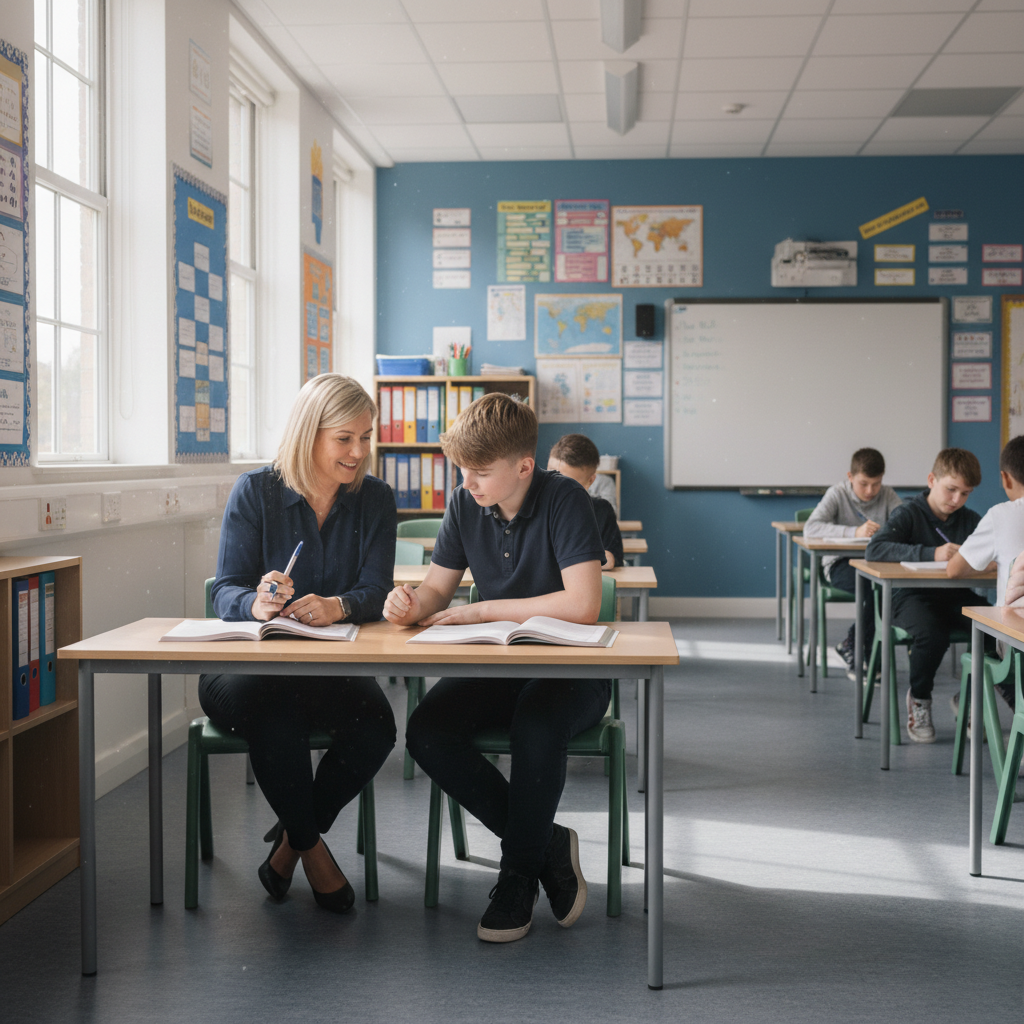
The impact of children arriving unprepared extends far beyond the individual child. Reception teachers describe spending significant portions of each day managing basic care needs rather than delivering structured learning.
For the first time this year, the school readiness survey asked teachers to quantify where teaching time is being lost. The results are striking. On average, teachers spend 1.4 hours every single day supporting the toileting needs of children who are not potty trained when they start school. That's the equivalent of losing one full school day of learning every week.
One reception teacher quoted in the survey describes the situation plainly: "Teachers and parents are telling us that this is a national crisis. We're now seeing almost 40% of children arriving for their very first day at school without the basic life skills they need to be able to access learning."
The knock-on effects ripple through entire classrooms. When teachers are repeatedly pulled away to manage care needs, it means:
Less structured learning time for all children in the class, not just those who are struggling.
Higher stress levels among teaching staff, who report feeling overwhelmed by care responsibilities they didn't train for.
Disrupted classroom dynamics, as other children lose focus and momentum when lessons are interrupted.
Achievement gaps that widen over time, as children who start reception without basic skills are much less likely to reach a good level of development by the end of the year.
Perhaps most concerningly, many children who start school unprepared struggle to catch up with their peers. The foundations laid (or not laid) in those crucial first weeks and months of reception can affect educational outcomes for years to come.
What's Driving the School Readiness Crisis?
The causes of declining school readiness are complex and interconnected, but several key factors emerge clearly from the research.
Screen Time: The Biggest Factor
Primary school staff now cite screen use by children and parents alike as the single biggest factor affecting school readiness.
The statistics are sobering. Almost all two-year-olds now watch screens daily, often for more than two hours. Close to 40% of three to five-year-olds use social media. Reception teachers describe children struggling to sit still, hold a pencil or speak in full sentences. Many become frustrated when tasks are not instant, and show weaker creativity, problem-solving and hand-eye coordination, patterns many teachers link directly to early and excessive screen exposure.
The reason screen time has such a profound impact on development relates to how young brains grow. Between birth and the age of five, children's brains are developing at their fastest rate. Language, emotional regulation and social skills formed in those years are strongly linked to later educational outcomes, mental health and wellbeing.
"What matters most in the early years is the two-way 'serve and return' interaction between a child and a caregiver," Gillespie explains. "This drives brain development. Sitting passively in front of a screen is like the child's brain playing tennis, but with no one on the other side of the net."
The Long Shadow of Austerity
The closure of Sure Start centres and cuts to early years support services continue to affect families, particularly in more deprived areas.
Sure Start was designed to equalise the educational and life chances of socially and economically disadvantaged children through childcare, play sessions and parenting advice. The programme was accessed by millions of children but was heavily scaled back between 2010 and 2019 as a result of austerity-driven cuts to council funding, with the biggest losses falling in areas that needed support most.
Teachers report that regional variations in school readiness have grown noticeably worse, with big leaps in the north-east, West Midlands, north-west and London, all areas where deep poverty is prevalent. The report does not break results down by income, but teachers and parents consistently link readiness issues to cost-of-living pressure and the inability to access health visitors and early years support services the way families once could.
Working Family Pressures
Many parents are working longer hours than ever before, juggling multiple jobs to make ends meet in the face of rising living costs.
One reception teacher quoted in the survey describes children "in at 7.30am and being picked up at 6pm," adding: "That's why you don't read, that's why you don't do your homework, that's why you don't know these things, because your parents are having to work every hour under the sun."
Recent research released this week by the campaign group Make Mothers Matter found that of 800 mothers surveyed in the UK, 71% said they felt overloaded, with 47% stating that they suffer from mental health issues, including 25% suffering from depression. Three-quarters of them were working mothers trying to balance their jobs with care duties, the responsibility for which remains unevenly spread in many households. The mothers surveyed said they handle up to 71% of household and caregiving tasks alone, regardless of whether they are employed or not.
When parents are stretched this thin, the time needed for the crucial "serve and return" interactions that drive early development simply isn't available.
SEND and Developmental Delays
Special educational needs and disabilities form a growing part of the school readiness picture. Of parents surveyed, 9% say their child has a formal SEND diagnosis, while 21% strongly suspect additional needs. Headteachers describe the number of children with complex needs as "astronomical" and one of their "biggest funding challenges."
However, the survey also captures some unease among staff about how SEND is understood and supported. A small number of teachers express concern that suspected SEND can sometimes be used to explain developmental delays in language, toileting or independence before those issues have been fully addressed. As one reception teacher puts it, parents may "pin it down to SEND, which might not even be true," potentially delaying early support that could help children make progress sooner.
This highlights the importance of early identification and intervention, as well as clearer guidance for parents about typical developmental milestones and when additional support might be needed.
Regional Variations Tell a Story
The school readiness crisis is not affecting all areas equally. The Kindred² survey shows particularly sharp increases in the percentage of children arriving unprepared in specific regions:
The north-east, West Midlands, north-west and London have all seen significant jumps in the proportion of children starting school without basic skills. These are also regions where poverty rates are highest and where Sure Start cuts hit hardest.
This geographic pattern reinforces that school readiness is not just a parenting issue. It's deeply connected to social policy, public services funding, and economic inequality.
What Parents Can Do
Despite these systemic challenges, there are practical steps parents can take to ensure their child is ready for reception.
Understand the Basics
By the time they start reception, children should ideally be able to:
Manage toileting independently, including wiping, flushing and washing hands without adult help.
Dress and undress themselves, including putting on shoes and coats (though managing fasteners like buttons and zips may still need practice).
Use a knife and fork to feed themselves at mealtimes.
Communicate their needs clearly, such as asking to use the toilet, saying they're hungry or thirsty, or telling an adult they feel unwell.
Sit still and focus on an adult-led activity for at least 10-15 minutes.
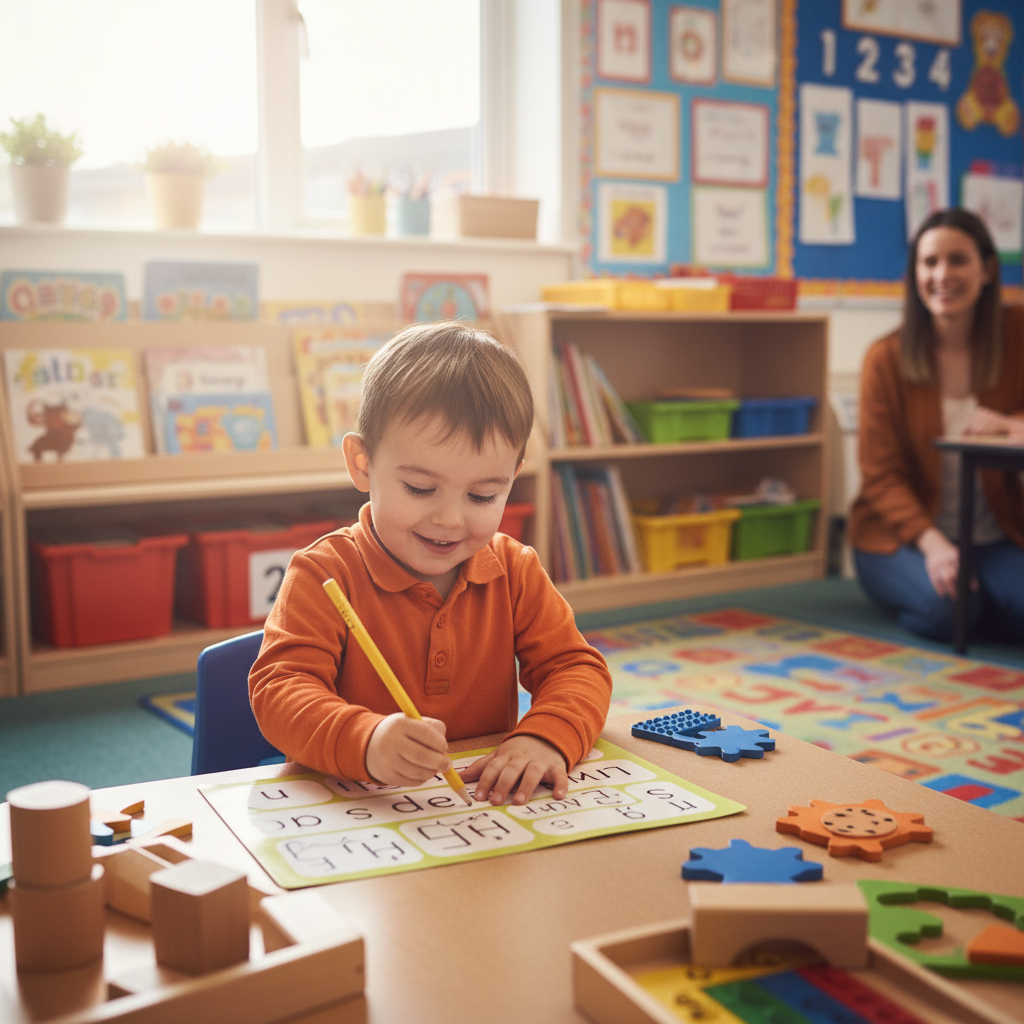
Hold a pencil correctly and make basic marks on paper.
Recognise their own name when written down.
Follow simple instructions from adults they don't know well.
Interact with other children, including taking turns and sharing.
It's worth noting that these are goals to work towards, not a pass/fail test. Children develop at different rates, and starting school slightly behind in one area doesn't doom them to struggle forever. But being aware of what teachers expect can help you identify areas where your child might benefit from extra practice in the months before they start.
Limit Screen Time Thoughtfully
With almost all two-year-olds now spending some time on screens each day, completely eliminating screen use may not be realistic for most families. However, parents can take steps to ensure screens support rather than hinder development:
Set clear boundaries around when and where screens are used. For example, no screens at mealtimes or in the hour before bed.
Prioritise interactive content over passive viewing. Apps and programmes that require the child to respond, make choices or solve problems are better than those where they simply watch.
Watch together when possible. Talking about what's happening on screen, asking questions and making connections to real life turns passive screen time into an interactive learning opportunity.
Model good habits yourself. Children whose parents are constantly on their phones learn that screens are more important than face-to-face interaction.
Protect sleep. Screen time before bed can interfere with sleep quality, which in turn affects behaviour, concentration and emotional regulation.
The government has announced that new guidance on screen use for under-fives will be published this spring, which should provide parents with clearer, evidence-based recommendations.
Prioritise the Early Years
"Lots of us think real education is what happens at school," Gillespie notes. "That it's GCSEs and A-levels that really count. But actually the most significant period of brain development happens much earlier."
The years between birth and five are foundational. Language, emotional regulation and social skills formed in those years are strongly linked to later educational outcomes, mental health and wellbeing.
This means making time for:
Conversation and storytelling. Talk to your child throughout the day. Narrate what you're doing, ask questions, listen to their responses. These back-and-forth exchanges are what build language skills and thinking ability.
Reading together. Even just 10-15 minutes a day makes a measurable difference. Let your child choose books they're interested in, ask questions about the pictures and story, and make it a warm, enjoyable ritual.
Play that involves imagination and problem-solving. Building blocks, drawing, role-play games, puzzles. These activities develop fine motor skills, creativity and the ability to think through challenges.
Time outdoors. Running, climbing, balancing and exploring nature all support physical development and sensory integration.
Social interaction with other children. Playdates, playgroups, or activities where children learn to share, take turns and navigate friendships.
Seek Support Early
If you have concerns about your child's development, speak to your health visitor or GP. Early intervention can make a significant difference, particularly for children with special educational needs.
National resources are also available to help. Kindred² is part of a coalition of early years groups producing practical, government-backed resources for parents, including a national potty training guide and the starting reception framework, which sets out clearly what children are expected to be able to do when they begin school.
"The message from parents is really clear," Gillespie says. "They want information earlier, they want it to be simple, and they want support, not judgment."
What Schools and Government Can Do
While parents play a crucial role, addressing the school readiness crisis requires action at multiple levels.
Better Information for Parents
Many parents simply don't know what school readiness means in practical terms. Clearer, earlier communication from schools, health visitors and government about developmental milestones and expectations would help close the gap between perception and reality.
The starting reception framework provides a model for this kind of practical, accessible guidance. Making these resources widely available and actively promoting them through health visitors, children's centres and nurseries could ensure more parents receive the information they need when it's most useful.
Rebuilding Early Years Support
The decline in school readiness has accelerated in parallel with cuts to Sure Start and early years services. Rebuilding this infrastructure, particularly in deprived areas, would provide families with the support they need during their children's most critical developmental period.
This doesn't necessarily mean recreating Sure Start exactly as it was, but it does mean acknowledging that many families, particularly those facing economic hardship, need accessible, high-quality support for early childhood development.
Supporting Reception Teachers
Reception teachers are increasingly being asked to perform tasks that fall outside traditional teaching responsibilities. Providing additional training, support staff and resources specifically for managing the care needs of children who arrive unprepared would help ensure that learning time is protected for all children.
Some schools have already implemented successful strategies, such as dedicated support staff for toileting needs or phased starts that allow teachers to work more closely with small groups. Sharing these approaches more widely could help schools respond effectively to the current reality.
Addressing Screen Time
The government's forthcoming guidance on screen use for under-fives is a positive step, but implementation will be key. Parents need clear, evidence-based recommendations that are realistic for modern family life, not finger-wagging about an impossible ideal.
Schools can also play a role by educating older children about healthy technology use and modelling good practices around when and how screens are appropriate.
Looking Ahead
If there is an optimistic note in this year's data, it is growing consensus. Teachers, parents and policymakers increasingly agree that school readiness is not a niche education issue but a national one, and that getting the early years right could make everything that follows easier for children, families and schools.
The school readiness crisis didn't emerge overnight, and it won't be solved overnight either. But by understanding what's driving it, what children genuinely need before they start school, and what support families require to provide those foundations, we can begin to turn the tide.
For parents preparing their child for reception in September 2026 or beyond, the message is clear: the early years matter more than you might think. Time spent on the basics, conversation, play, independence and limiting screens, is time invested in your child's entire educational future.
And crucially, if you're struggling to manage it all, you're not alone. The pressures facing families today are real and well-documented. Seeking support, asking questions and connecting with other parents are not signs of failure. They're signs of doing the best you can for your child in challenging circumstances.
The first day of school should be exciting and full of possibility. Ensuring every child arrives ready to learn is a shared responsibility, one that requires honest conversations, adequate support systems and recognition that the earliest years of childhood are where our most important educational work begins.