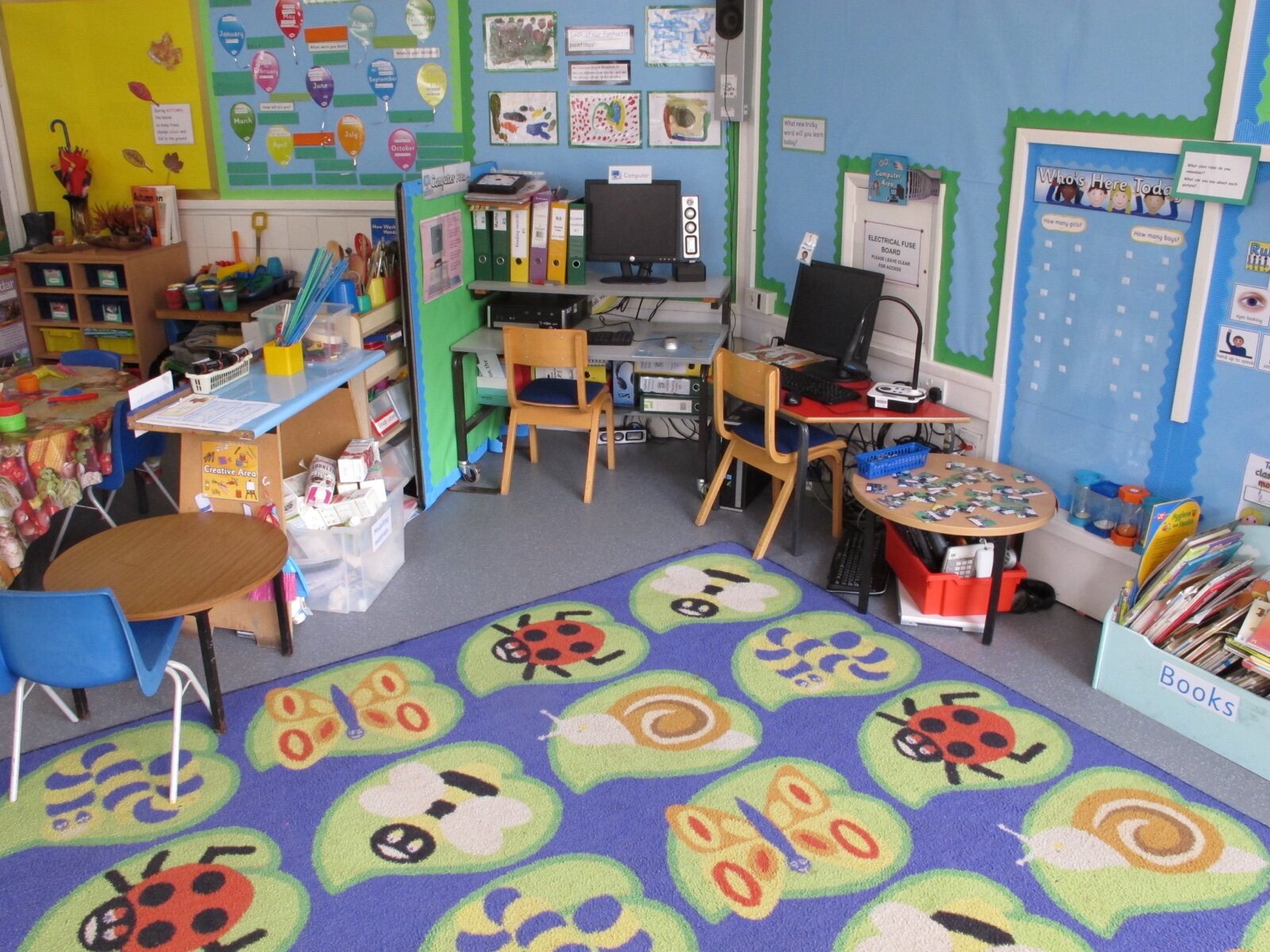
1st year classroom, Hallfield Primary School by David Hawgood (CC BY-SA 2.0), via Geograph.
SEN Support vs EHCP: The 6-Week and 20-Week Rules
The difference between SEN support and an EHCP is not a difference of degree. It is a difference of legal status, and almost every argument parents have with a school or a council comes back to it. SEN support is a professional judgement made inside a school, funded from the school's own budget, with nothing you can enforce. An education, health and care plan is a document issued by a local authority after a statutory assessment, and the special educational provision written into section F must be secured by law.
At the January 2026 school census, 1,319,780 pupils in England were on SEN support, 14.8 per cent of all pupils, and 538,547 had an EHC plan, 6.0 per cent. Both figures rose on the year before. Roughly seven in ten children identified with SEN sit in the first group, which is why understanding what SEN support is supposed to deliver matters more than most parents are told.
The two levels, side by side
| SEN support | EHC plan | |
|---|---|---|
| Who decides | The school, with the SENCO | The local authority, after assessment |
| Legal document | None | Yes, a statutory plan |
| Who funds it | School budget, first £6,000 assumed | School budget plus council top-up |
| Enforceable | No | Yes, section F must be secured |
| Right of appeal | No, complaint only | Yes, to the SEND Tribunal |
| Review | Termly, informally | Annual review, statutory |
What SEN support is meant to be
SEN support is not a label. Under the SEND Code of Practice it is a cycle, the graduated approach, and it has four steps that repeat: assess, plan, do, review.
- Assess: the class teacher and the SENCO work out what the difficulty actually is, using the school's own data and, where needed, outside specialists.
- Plan: they agree specific provision, who delivers it, how often, and what success would look like. Parents should be told this.
- Do: the class teacher stays responsible for the child, even where a teaching assistant delivers an intervention.
- Review: usually termly, judging whether the provision worked and changing it if not.
The single most useful thing a parent can do at this stage is ask for the cycle in writing. A school that cannot show you what was tried, for how long, and what happened, has not really run the cycle, and that gap is exactly what an EHC needs assessment request later turns on.
The £6,000 figure, and what it is not
Mainstream schools hold a notional SEN budget, and the funding system assumes they will meet the first £6,000 of additional support for an individual pupil from it each year before the local authority tops up. Parents hear this quoted as a cap: "we have already spent our £6,000". It is not a cap. It is an assumption inside a funding formula. The school's duty is to use its best endeavours to secure the special educational provision a pupil needs, and that duty does not switch off at a spending threshold.
When SEN support is not enough
The legal test for an EHC needs assessment is whether the child may have special educational needs that call for provision beyond what is normally available in a mainstream setting. In practice, the honest triggers are:
- Two or three full assess-plan-do-review cycles have run and the gap is not closing.
- The provision needed is more specialist, or more sustained, than the school can arrange from its own resources.
- Needs cross into health or social care, which SEN support alone cannot commission.
- Attendance, exclusion risk or emotional distress is escalating despite support in place.
A diagnosis by itself is not a trigger. A child with a diagnosis whose needs are met well on SEN support does not need a plan, and a child with no diagnosis at all can need one.
The statutory clock
Once a request goes in, the timings are fixed in law, and they are the strongest tool a parent has.
| Stage | Deadline |
|---|---|
| Decide whether to carry out an assessment | 6 weeks from the request |
| Professionals to provide advice | 6 weeks from being asked |
| Decide whether to issue a plan | 16 weeks from the request |
| Comment on the draft and name a school | 15 calendar days |
| Final plan issued | 20 weeks from the request |
Missed deadlines are common and they are still breaches. Put the date of your request in writing and diarise week six and week twenty. Our guide to applying for an EHCP walks through the request itself.
What you can do at each level
The remedies are different, and this is where parents lose time. There is no appeal against SEN support, because there is nothing to appeal against: no decision, no document. If provision is not happening, the route is the school's complaints procedure, then the governing body, then Ofsted or the Department for Education for systemic failures.
With an EHC plan there is a statutory right of appeal to the First-tier Tribunal, and it applies to a refusal to assess, a refusal to issue, the content of sections B, F and I, and a decision to cease a plan. Mediation is offered first for most appeals, and you need a mediation certificate before lodging, unless the appeal is only about the school named. Our guide to what an EHC plan contains explains which sections are appealable.
Practical steps if you are at the SEN support stage now
- Ask the SENCO for a written record of the current assess-plan-do-review cycle, including start dates and outcomes.
- Ask what the provision is, delivered by whom, for how many minutes a week. Vague answers are the warning sign.
- Keep your own file: reports, emails, attendance data, anything from outside professionals.
- If two cycles have run without progress, ask the school to request an EHC needs assessment, or make the request yourself.
- Date everything. The clock only helps you if you can prove when it started.
More on the wider picture in our SEND support guide, and the rest of our parent guides are on the Schools Insight homepage.
Frequently asked questions
What is the difference between SEN support and an EHCP?
SEN support is help the school arranges and funds from its own budget, with no legal document and no enforceable entitlement to any particular provision. An education, health and care plan is a legal document issued by the local authority after a statutory assessment, and section F of it must be secured by law. At January 2026, 1,319,780 pupils in England were on SEN support and 538,547 had an EHC plan.
Does my child need an EHCP to get help at school?
No, and most children with special educational needs never have one. Roughly seven in ten pupils identified with SEN in England are on SEN support only. A diagnosis does not create an entitlement to a plan either: the test is whether the child's needs can reasonably be met from the resources normally available to a mainstream school.
How long does an EHC needs assessment take?
The local authority has six weeks from the request to decide whether to assess. If it does assess, the whole process from the original request to a final plan being issued must take no more than 20 weeks. Professionals asked for advice have six weeks to provide it, and you get 15 calendar days to comment on the draft plan and name a school.
What is the £6,000 rule?
Mainstream schools hold a notional SEN budget and are expected to meet the first £6,000 of additional support for a pupil from it each year. Above that, the local authority provides top-up funding. It is a funding assumption, not a legal cap on what a school must do, and it is often quoted at parents as though it were a ceiling.
Can I ask for an EHC needs assessment myself?
Yes. Parents, young people over 16 and schools can all request an assessment directly from the local authority. You do not need the school's agreement, though evidence from the school helps. If the authority refuses to assess, or refuses to issue a plan after assessing, you have a right of appeal to the SEND Tribunal.
What should SEN support look like in practice?
It should run on the graduated approach: assess, plan, do, review. The SENCO and the class teacher agree what the difficulty is, decide on specific provision, deliver it, and review whether it worked, usually termly. Ask for it in writing. A cycle you cannot see written down is very hard to appeal later.
Sources
- Special educational needs in England, January 2026 census, Department for Education: explore-education-statistics.service.gov.uk
- SEND Code of Practice: 0 to 25 years: gov.uk
- Children and Families Act 2014, Part 3: legislation.gov.uk
Figures and timings checked on 20 August 2026. The SEND system is under review, so confirm current guidance before relying on a deadline.