School Closed Because of Snow? Who Decides, How Attendance Is Recorded and Your Rights at Work
School closures for snow are decided school by school, usually by the head teacher early that morning, and there is no national snow rule. This page explains how the decision is made, how a snow day is recorded on your child's attendance (it does not count against them if the school is shut), what the DfE expects on remote learning, and what rights you have at work when you suddenly need to stay home.
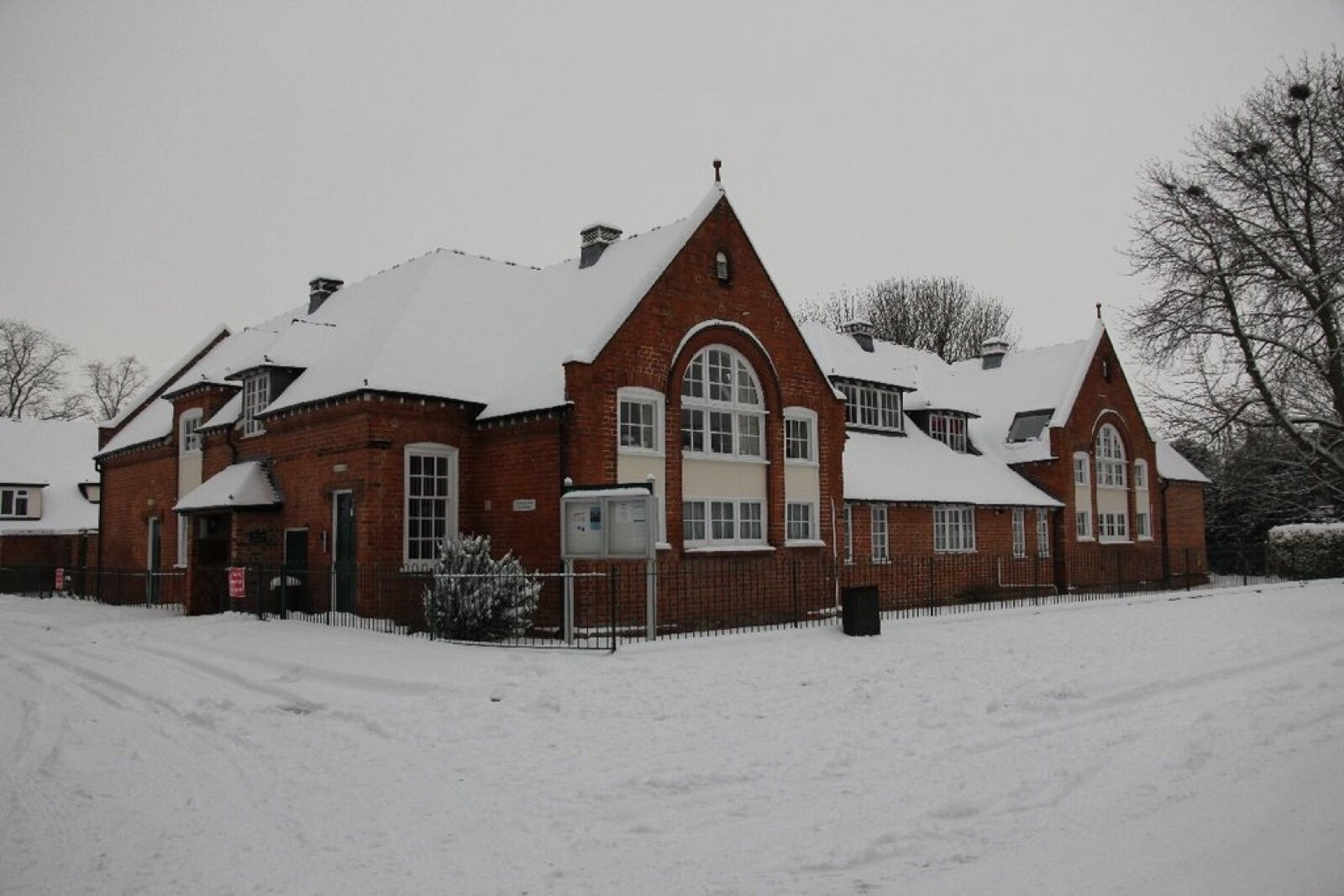

Who decides: the head teacher (or the council for some schools). DfE guidance says schools should stay open in severe weather wherever it is safe.
Your child's record: an unexpected whole-school closure is recorded as code Y4 and does not count as an absence.
Remote learning: schools should consider it during a weather closure; it is guidance, not a legal duty.
School open, roads blocked: special codes cover missing school transport and widespread travel disruption; otherwise the school decides.
Work: employees have a right to reasonable time off for dependants in an emergency, but it does not have to be paid.
Who decides to close a school because of snow
There is no national rule that closes schools at a certain depth of snow. The decision is made locally: the Department for Education's remote education guidance refers to the "exceptional occasions when school leaders or the local authority decide it is not possible to open safely". In practice the head teacher makes the call, usually early in the morning, after checking whether staff can get in, whether paths and car parks are safe, and whether the heating and water are working.
The DfE's emergency planning guidance sets the default firmly on staying open: "During severe weather conditions, you should keep your setting open and let as many children, pupils or students attend as possible, where safe to do so." It accepts that a school "might be necessary to close temporarily due to inaccessibility or risk of injury". That is why you sometimes see a partial closure, with some year groups in and others at home, instead of a full one.
How you will find out
Schools normally use their usual messaging app, text or email, plus a notice on the school website. Many councils also publish a list of closed schools on their website on snowy mornings, and local radio still carries closure lists in some areas. Make sure the school has your current mobile number before the first cold snap, and check the school's website rather than relying on social media posts from other parents.
Does a snow day count against my child's attendance?
No, if the school itself is shut. Under the DfE's statutory attendance guidance, Working together to improve school attendance (updated July 2026), when a school that planned to open is closed unexpectedly, for example because of adverse weather, no register is taken. Every pupil is recorded with code Y4, "unable to attend due to the whole school site being unexpectedly closed". That code is classed as "not a possible attendance" for statistical purposes, so it does not lower your child's attendance figure.
If only part of the building is shut, code Y3 applies to the pupils the school cannot fit into the parts still in use. It is also classed as not a possible attendance.
What if the school is open but we cannot get there?
This is the situation that worries most parents. Two codes may apply:
- Y1: your child cannot attend because the school is not within walking distance and the transport normally provided by the school or council is not running. Walking distance means 2 miles for a child under 8 and 3 miles for a child of 8 or over, by the nearest available route. Our guide to free school transport explains who gets that transport.
- Y2: your child cannot attend because of widespread disruption to travel caused by a local, national or international emergency.
Both are classed as not a possible attendance. If neither fits, which code is used is the school's decision. Phone or message the school as early as you can, say exactly why the journey is unsafe, and keep the message. Our explainer on school attendance rules covers how the other codes work, and school attendance fines explains when absence can lead to a penalty.
Should the school set work when it closes?
The DfE says that if a school is "temporarily closed during severe weather", it should "consider providing remote education". Its separate remote education guidance, last updated in August 2024, asks schools to have provision ready "as soon as reasonably practicable, though in proportion to the length of absence". It also calls remote education a "last resort" and says it "does not change the imperative to remain open, or to reopen as soon as possible".
So for a single snow day, a few tasks set on the school's online platform is a reasonable expectation; for a longer closure, you can expect more structure. Remote education is guidance rather than a legal requirement, so if your child's school sets nothing, raise it politely with the head and the governors instead of assuming a rule has been broken.
Your rights at work if school closes
Employees have a legal right to time off to deal with an emergency involving a dependant, under the GOV.UK time off for dependants rules. You are allowed "a reasonable amount of time off to deal with the emergency, but there's no set amount of time", and there is no limit on how many times you can use it. The examples GOV.UK gives of disrupted care include a childminder not turning up or a nursery closing unexpectedly, which is the closest match to a sudden school closure.
Two catches. First, your employer "may pay you for time off to look after dependants but they do not have to". Second, GOV.UK says you cannot have the time off "if you knew about a situation beforehand", so a closure announced days in advance is better handled as annual leave or a change of hours. Check your contract or staff handbook, as many employers offer more than the legal minimum.
Will snow days be made up?
Schools are not routinely told to add extra days to make up for weather closures, and none of the DfE guidance we checked requires it. Term dates stay as published; our guide to school term dates explains who sets them.
A quick plan for the first snowy morning
- Check the school website or app before setting off, not just the night before.
- If the school is open but you judge the journey unsafe, tell the school early and explain why.
- If it is closed, look for work on the school's online platform later in the morning.
- Tell your employer as soon as you know, and agree whether the time off is unpaid, paid or taken as leave.
- Line up a back-up childcare plan with another family for future closures.
Not sure whether a cold is too much for school? Our guide is my child too ill for school covers the NHS advice.
Sources: DfE, Emergency planning and response for education, childcare and children's social care settings; DfE, Providing remote education; DfE, Working together to improve school attendance (July 2026), paragraphs 382 to 391; GOV.UK, Time off for dependants. Checked 9 November 2026. This page covers schools in England.
Frequently Asked Questions
Who decides if a school closes because of snow?
The head teacher, or in some cases the local authority. DfE guidance says schools should stay open in severe weather wherever it is safe, so closures are a local judgement made on the day.
Does a snow day count as an absence?
Not when the whole school is closed. Pupils are recorded with code Y4, which is classed as not a possible attendance, so it does not lower your child's attendance figure.
What if school is open but we cannot get there in the snow?
Code Y1 covers pupils whose usual school or council transport is not running and who live beyond walking distance. Code Y2 covers widespread travel disruption caused by an emergency. Otherwise the school decides the code, so contact it early and explain why.
Do schools have to set work on a snow day?
No legal duty applies, but DfE guidance says schools temporarily closed by severe weather should consider providing remote education, in proportion to the length of the closure.
Can I take time off work if my child's school closes?
Yes. Employees can take reasonable time off to deal with an emergency involving a dependant, but your employer does not have to pay you, and the right does not cover situations you knew about beforehand.
Do schools make up days lost to snow?
Generally no. Current DfE guidance does not require schools to add extra days to make up for a weather closure, and term dates usually stay as published.
More guides for parents on the Schools Insight homepage.