School Catchment Area Finder: How to Check Which Schools You Can Get Into
Understanding school catchment areas is crucial when choosing where to live or which schools to apply for. Many parents discover too late that their dream school is outside their catchment area, leaving them with limited options. This guide explains exactly how to find your catchment area, what it means for your school applications, and how to maximise your chances of getting your preferred school.
What Is a School Catchment Area?
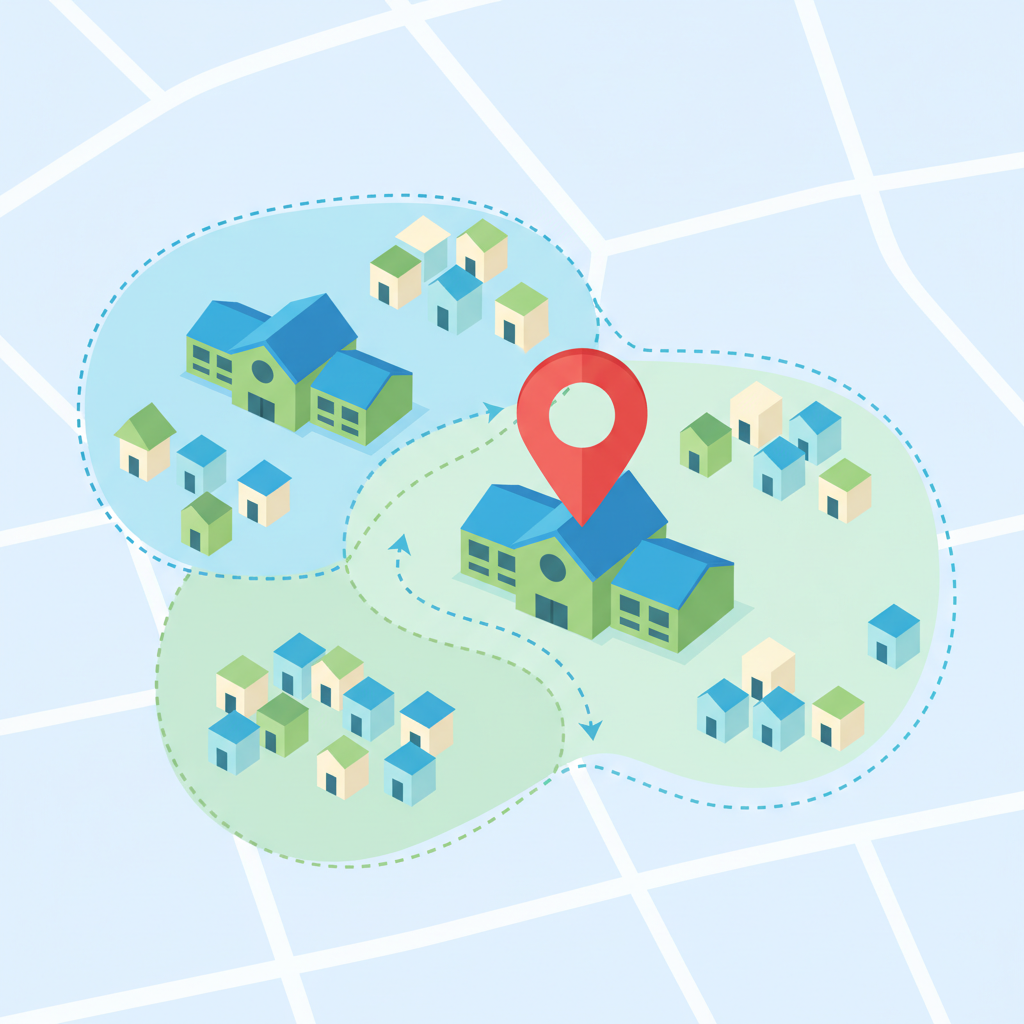
A catchment area is the geographic zone from which a school accepts pupils. Think of it as an invisible boundary drawn around a school, though the actual area can be irregular and changes from year to year based on demand.
Important: Not all schools use catchment areas. Many schools prioritise admissions by straight-line distance from home to school, or use other criteria like sibling connections, faith requirements, or selective testing.
The term "catchment area" is often used loosely to mean "the area from which a school typically accepts pupils," even when distance is the actual criterion used.
How to Find Your School Catchment Area
1. Use Your Local Council's School Finder Tool
Every local authority provides an online tool to search for schools in your area. These are the most reliable sources:
How to access it:
- Go to your local council's website
- Search for "school admissions" or "find a school"
- Enter your postcode
- The tool will show schools in your area and indicate your priority
Most council tools will show you:
- Schools within a certain radius
- Which admission criteria you meet
- Previous years' admission distances
- Whether you're in a priority area
2. Check Individual School Websites
Schools publish detailed admissions information including:
- Their admissions policy
- Previous years' furthest distance admitted
- Maps showing where accepted pupils lived
- Specific catchment area boundaries (if applicable)
Look for an "Admissions" or "Join Us" section on the school website.
3. Use the Government's School Comparison Tool
Visit www.gov.uk/schools-admissions/comparing-schools and:
- Enter your postcode
- See local schools ranked by distance
- View Ofsted ratings and performance data
- Check detailed admissions information
4. Contact the Council Admissions Team
For complex situations, speak directly to your local authority's school admissions team. They can:
- Confirm whether you're in a catchment area
- Explain how admissions criteria apply to your circumstances
- Provide previous years' admission data
- Clarify any confusing policies
Understanding Different Admission Criteria
Schools don't all use the same system. Here are the most common approaches:
Distance-Based Admissions
The most common method in England. Schools measure straight-line distance from your home to the school entrance. The closest applicants get places first.
What you need to know:
- Distance is usually measured "as the crow flies," not walking distance
- Every year, the furthest admitted distance changes based on applications
- Living 0.5 miles away doesn't guarantee a place if 200 closer families apply
Catchment Area Priority
Some schools have defined catchment boundaries. Everyone inside the boundary gets priority over those outside.
How it works:
- If you live inside the catchment, you're in a higher priority group
- If the school is oversubscribed with catchment applicants, distance within the catchment is used
- Living just outside a catchment boundary can mean you have virtually no chance
Parish Boundaries (Faith Schools)
Church schools often use parish boundaries rather than catchment areas.
Key points:
- You may need to prove church attendance
- Parish boundaries don't always align with catchment areas
- Some faith schools have baptism requirements
Sibling Priority
Nearly all schools give priority to siblings of current pupils.
This can override catchment areas:
- A sibling 2 miles away gets priority over a non-sibling 200 metres away
- Sibling priority usually applies if the older child will still be at the school when the younger one starts
- Check the specific policy, some schools define "sibling" differently
How to Find Last Year's Admission Distance
This is the most useful piece of information when assessing your chances.
Where to find it:
- Your council publishes admission data annually
- Look for "admission statistics" or "last distance admitted"
- Schools often publish this on their website
- Request it directly from the admissions team
How to interpret it:
If last year's furthest distance was 0.8 miles:
- Living 0.5 miles away = very good chance
- Living 0.75 miles away = good chance
- Living 1.2 miles away = unlikely unless circumstances change
Warning: Distances can fluctuate significantly year to year based on:
- Birth rates in the area
- New housing developments
- Popularity of other local schools
- Changes to admission numbers
Do Catchment Areas Change?
Yes, catchment areas and admission distances change regularly.
Why they change:
1. Demand fluctuates: More or fewer applications each year 2. Bulge years: Some birth years have more children 3. New schools open: This can relieve pressure on oversubscribed schools 4. School expansions: Some schools increase their Published Admission Number (PAN) 5. Housing developments: New homes bring new applicants 6. Demographic shifts: Areas change as families move in and out
What this means for you:
Never assume that because someone got into a school from your address five years ago, you will too. Always check the most recent data and apply to multiple schools.
Multiple Local Authorities
If you live near a council boundary, you can apply to schools in neighbouring authorities.
How it works:
- Apply through your home council
- You can list schools from any authority
- Each school applies its own admission rules
- Your home council coordinates all offers
Strategic considerations:
- You might have better chances in a neighbouring borough
- Grammar schools in Kent while living in London, for example
- Check whether neighbouring schools prioritise their own residents
What If You're Outside All Catchment Areas?
This is increasingly common in urban areas where all schools are oversubscribed.
Your options:
1. Apply Anyway
- List schools in order of preference
- You might get lucky if fewer local families apply
- Late movers sometimes create unexpected places
2. Consider Less Popular Schools
- Schools further from transport links
- Schools in challenging Ofsted categories
- Newer schools without established reputations
3. Move House
This is drastic but some families do it. Consider:- Renting temporarily in a catchment area
- The council may investigate if they suspect false addresses
- Fraud consequences are serious, potentially criminal
4. Apply for Out-of-Area Schools
- Faith schools may prioritise church attendance over location
- Grammar schools use testing, not location
- Some schools have random allocation systems
5. Private or Independent Schools
If all else fails and you can afford it, independent schools don't use catchment areas.Catchment Area Myths Debunked
Myth 1: "Catchment areas are fixed boundaries"
Reality: Most schools use distance, which creates a fluid, changing zone, not a fixed boundary.Myth 2: "If I'm in the catchment, I'm guaranteed a place"
Reality: Oversubscribed schools may not admit all catchment applicants. Siblings and other criteria come first.Myth 3: "I can only apply to my catchment school"
Reality: You can apply to any school. Catchment just affects your priority.Myth 4: "Private schools have catchment areas"
Reality: Independent schools set their own criteria, usually not based on location.Myth 5: "Renting in a catchment area for a month is enough"
Reality: Councils investigate suspicious addresses. You need genuine residency, often proven over time.Tools and Resources
Official Council Tools
London Boroughs:
- Each borough has its own admissions portal
- Pan-London coordination system for offers
- Check your specific borough's website
Other Major Cities:
- Birmingham: www.birmingham.gov.uk/schooladmissions
- Manchester: www.manchester.gov.uk/schooladmissions
- Leeds: www.leeds.gov.uk/schooladmissions
National Resources
- Gov.uk School Finder: www.gov.uk/schools-admissions
- Get Information About Schools (GIAS): Official school data
- Locrating: Shows school locations on maps with admission distances
Mapping Tools
Use Google Maps to:
- Measure straight-line distance from your home to schools
- Identify schools within a certain radius
- Plan school run routes
How to Maximise Your Chances
Research Thoroughly
- Check admission data for the last 3-5 years
- Understand trends (distances increasing or decreasing)
- Visit schools to assess fit
Use All Your Preferences
- Most councils allow 4-6 school preferences
- List realistic options in true order of preference
- Include a "safe" option you're confident of getting
Understand the Equal Preference System
- Your ranking doesn't affect how schools see your application
- Each school considers you against their criteria
- You get your highest preference that offers you a place
- Never put a school higher just to "increase chances"
Meet Deadlines
- Late applications go to the bottom of the pile
- You'll only be considered after on-time applications
- Mark the deadline in your calendar
Keep Your Address Updated
- Distance is measured from your address on the deadline date
- Update the council immediately if you move
- Provide proof of address when requested
Consider Sibling Strategy
If you have multiple children:- Getting one child into a school often means siblings follow
- Sometimes worth accepting a less preferred school for sibling priority later
- Check sibling policies carefully, they vary
Frequently Asked Questions
Can I apply to schools outside my catchment area?
Yes, absolutely. You can apply to any school, but you'll be considered under their admission criteria, which may prioritise local residents.What if I move house after applying?
Contact your local authority immediately. Your priority may change based on your new address. If you move before the deadline, your new address is used. After the deadline, it's more complex.Do catchment areas apply to secondary schools?
Yes, but secondary schools often cover larger areas and may have additional criteria like feeder primary schools or selective testing.Can I use a relative's address to get into a school?
No. This is fraud and can result in your offer being withdrawn, the place being removed from your child mid-year, and potential criminal prosecution.How accurate are catchment area maps online?
Unofficial maps are approximate guides only. Always verify with the school and local authority. The only reliable figure is the previous year's furthest distance admitted.What happens if I'm exactly on the catchment boundary?
If distance is the tiebreaker, measurements are precise to several decimal places. Random allocation or lottery systems may be used if distances are identical.Do all children in the catchment get in?
Not necessarily. If the school is oversubscribed even with catchment applicants, other criteria like siblings or random allocation apply.Can catchment areas overlap?
Yes, you might live in the catchment area of multiple schools or no schools at all.How do I find out if a new housing development will affect catchment areas?
Ask the council's planning and admissions teams. Major developments can significantly change admission patterns.Is it worth appealing if I'm outside the catchment?
You can appeal, but distance-based refusals are hard to win unless there was an error in the process. Appeals succeed in only about 20% of cases.Final Thoughts
Finding your school catchment area is just the first step in navigating the admissions process. Understanding how catchment areas work, realistic assessment of your chances based on previous years' data, and strategic application to multiple schools will give you the best shot at securing a place at a school that's right for your child.
Remember, being in a catchment area doesn't guarantee a place, and being outside doesn't mean you have no chance. Research thoroughly, use all your preferences wisely, and apply on time. The school admissions system is complex, but with the right information, you can navigate it successfully.
Start your search early, visit schools in person, and don't just focus on league tables and Ofsted ratings. The right school for your child is about fit, values, and environment as much as location.