Home › Guides
How to Apply for a School Bursary, Step by Step
Knowing how to apply for a bursary matters as much as qualifying for one. Independent schools handed out £2.1 billion in fee assistance last year and the average means-tested bursary was worth £13,852, but the money is allocated on a timetable, to a finite pot, on the strength of the paperwork you submit. This is the process from first enquiry to award letter, and the points where families lose out.
First, know what you are applying for
A bursary is means-tested help with fees. A scholarship is awarded for ability, is usually worth a small percentage, and at most schools can be topped up by a bursary. If you need substantial help, the bursary is the thing that will deliver it. We cover the difference in detail in bursaries and scholarships explained.
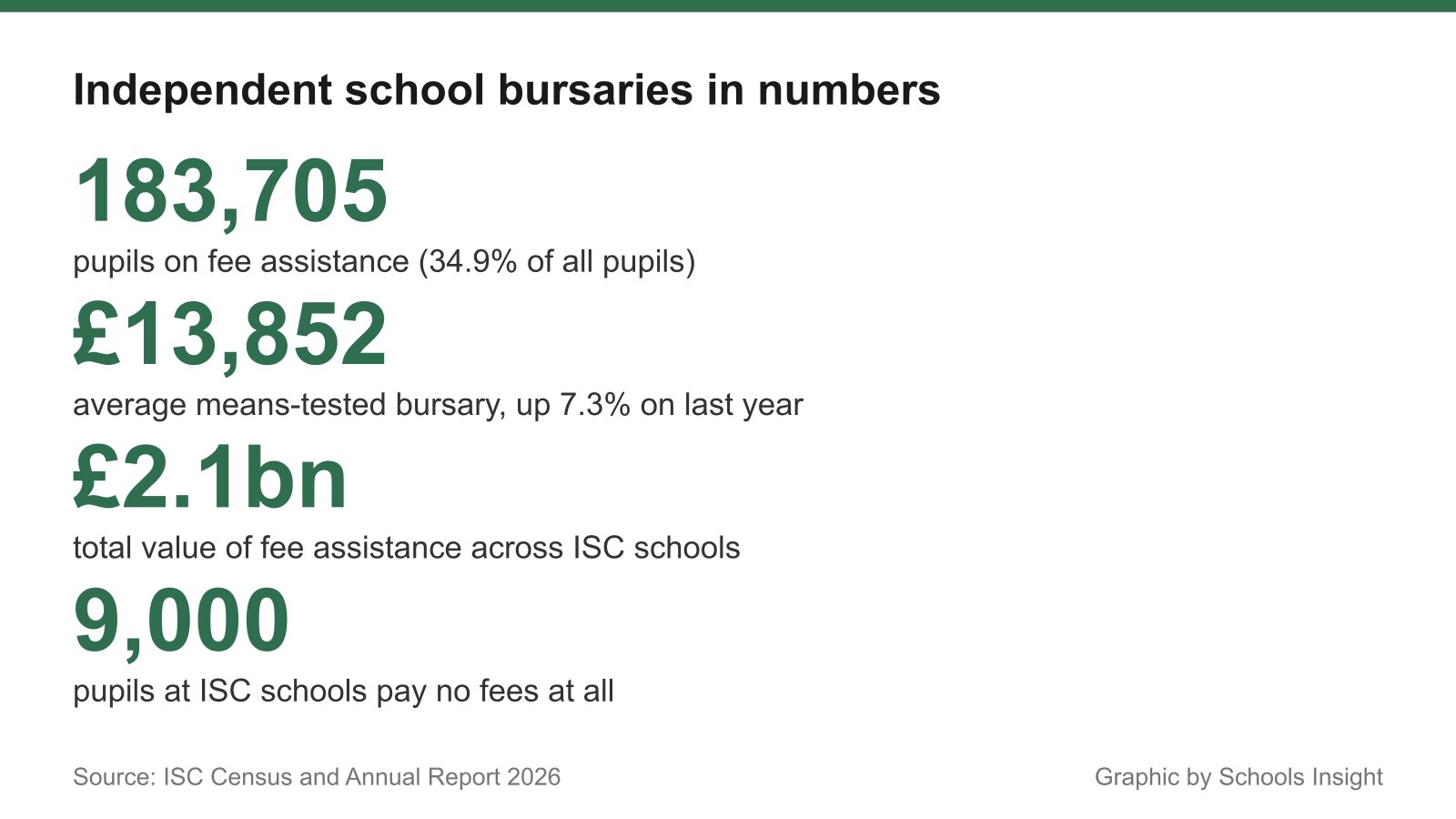
Scale first, so you can judge your own odds. The ISC Census and Annual Report 2026 records 183,705 pupils on some form of fee assistance, 34.9% of all pupils at member schools, at a total value of £2.1 billion. The average means-tested bursary was £13,852, up 7.3% on the previous year. Over half of recipients get more than 50% off, and just under 9,000 pupils pay nothing at all.
Step 1: Work out the real cost first
Before you ask for anything, know the number you are trying to close. Fees are only part of it: uniform, trips, music lessons, exam entries and the coach can add a meaningful sum. Our guide to private school fees in the UK sets out the current picture, and help with school costs covers the state-sector support that runs alongside.
Step 2: Start 12 to 18 months out
The standard entry points are 11+, 13+ and 16+, and bursary assessment runs alongside admissions for those years. That means the useful window opens roughly a year and a half before the September your child would start. Applications at other ages are welcome at most schools, and so are applications from existing families whose circumstances change unexpectedly, but the money is easiest to reach at a main entry point.
Step 3: Read the school's bursary policy, not the prospectus
Almost every school publishes a bursary policy, and it is far more informative than the marketing. Look for three things: the income band the school says it considers, whether assets and equity are counted, and whether the school states a maximum award. Many schools also publish an online bursary calculator that gives an indicative figure in a few minutes. Use it before you invest weeks in an application to a school that will not reach your number.
Step 4: Register for a place and for the bursary
These are two separate applications at almost every school. Registering for a place does not put you in the bursary queue. Confirm the bursary deadline in writing, because it is sometimes earlier than the admissions deadline, and put it in a calendar.
Step 5: Fill in the means-test form properly
This is the heart of it. Expect to declare:
- Gross and net income for every adult in the household, including self-employment, dividends, rental income and benefits.
- Savings, investments, pensions in drawdown and any lump sums.
- Property, including equity in the family home and any second or inherited property.
- Other dependants, including other children in fee-paying education.
- Outgoings: mortgage or rent, essential debt repayments, care costs.
Two rules make the difference. Declare everything, including money from grandparents, because undeclared support found later can void an award. And explain anything unusual in the free-text box rather than hoping nobody notices: a one-off redundancy payment, a business year that was atypical, a disability cost that swallows a chunk of income.
Step 6: Assemble the evidence
Have these ready before you start, because the form will ask for them and a rushed scan of the wrong year's figures delays everything:
- Three months of payslips and P60s for each earner.
- Full self-assessment tax returns and accounts if self-employed, usually for two or three years.
- Three to six months of bank statements for all accounts.
- Mortgage statement or tenancy agreement.
- Benefit award letters.
Step 7: The assessment, and who does it
Some schools assess in-house. Many outsource to an independent specialist, most commonly Bursary Administration Ltd, whose assessors are DBS checked and bound by confidentiality agreements. The point of using an external assessor is that the people deciding your finances are not the people deciding whether to offer your child a place.
A home visit is common where a significant award is in play. Treat it as verification, not judgement. The assessor is confirming that the household described in the form is the household that exists.
Step 8: The offer, and what to do with a disappointing one
Awards are expressed as a percentage of fees and usually come with conditions: annual review, reporting material changes, sometimes an expectation about attendance or conduct. If the award is lower than you need, do not simply decline. Ask, politely and in writing:
- Whether the assessment can be reviewed if a figure was misunderstood.
- Whether the school holds any hardship or restricted funds beyond the main bursary pot.
- Whether a higher award might be possible at the next entry point, or in a later year as pupils leave.
Some schools will move; many genuinely cannot. Ask a second and third school as well, because awards vary enormously between schools with similar fees.
Step 9: Keep it alive
Bursaries are reviewed every year, and the review is a smaller version of the original form. Keep your paperwork in one place, report changes as they happen rather than at review time, and read the award letter's conditions once a year. A bursary lost on a technicality is the worst possible outcome.
Frequently Asked Questions
When should I apply for a school bursary?
At the same time as, or just before, the school's main admissions deadline for the entry point you want. Most senior schools assess bursaries alongside 11+, 13+ and 16+ entry, and bursary funds for a year group are allocated once. A strong application submitted late is often competing for money that has already gone.
What income do you need to qualify for a bursary?
There is no single national threshold; each school sets its own. Most publish a guide band, and many run an online bursary calculator. Assessment looks at household income, savings and investments, equity in property, other dependants and outgoings, so two families on the same salary can get very different awards.
Who assesses a bursary application?
Some schools assess in-house through the bursary office. Many use an external specialist such as Bursary Administration Ltd, whose assessors are DBS checked and work under confidentiality agreements, so the process is independent of the admissions team that decides on a place.
Do bursary assessors visit your home?
Often, yes. A home visit is standard practice at schools that make large awards, and it is a verification step rather than an inspection of your taste in furniture. The assessor is checking that the picture in the form matches reality, including anything not visible on a payslip.
Can you get a 100% bursary?
Yes. Just under 9,000 pupils at ISC schools pay no fees at all through means-tested bursaries, scholarships or other arrangements, and over half of means-tested bursary recipients get more than 50% off. Full awards are rare, competitive and usually reserved for transformational cases.
What happens if my circumstances change mid-year?
Tell the school straight away. Bursaries are reviewed annually and almost every award letter requires you to report a material change. Schools would far rather adjust an award upwards after a redundancy than discover an undeclared change at the next review.
Sources
- ISC Census and Annual Report 2026: 183,705 pupils on fee assistance, £2.1bn total, £13,852 average means-tested bursary.
- Independent Schools Council, bursaries: how means-tested awards work and how to apply.