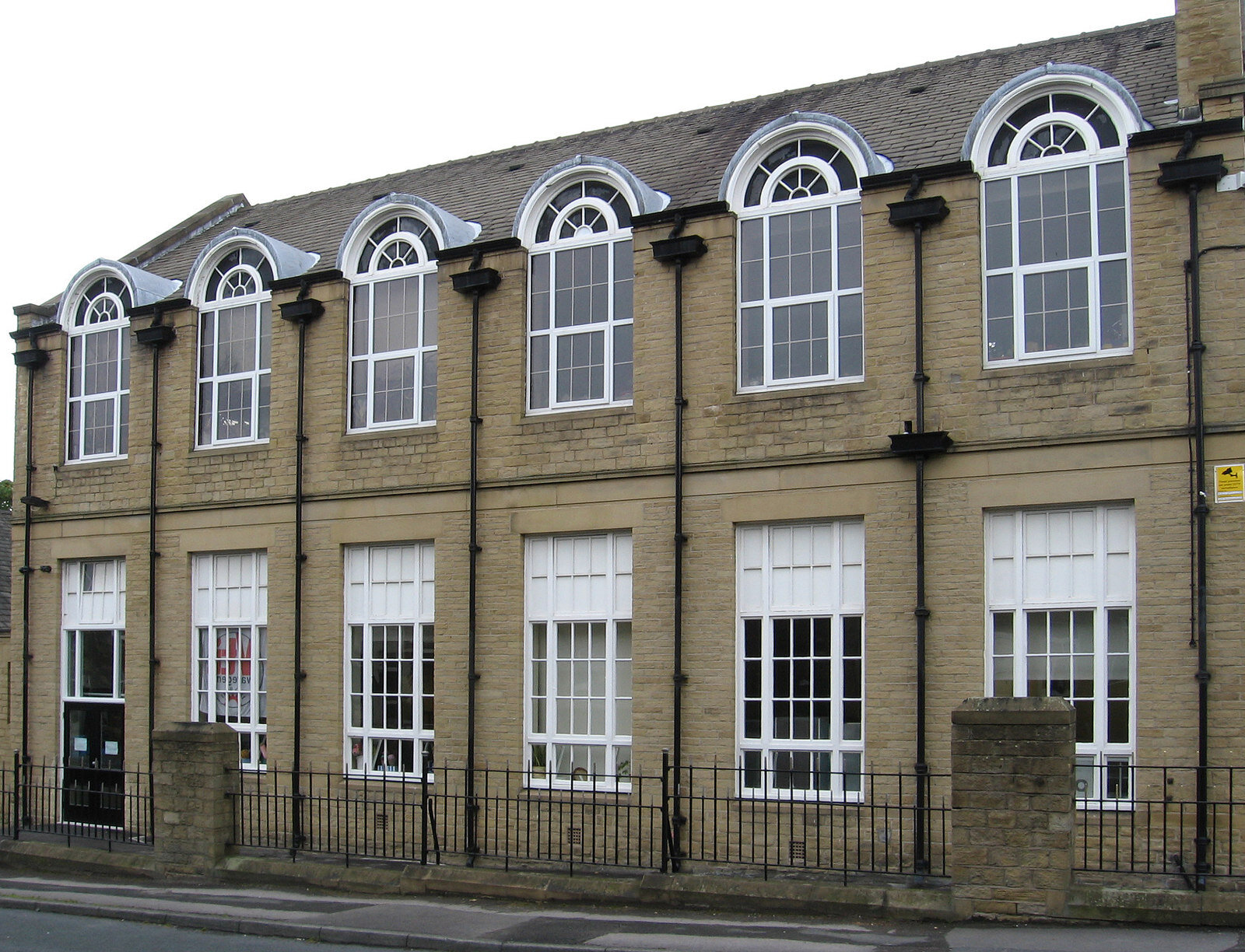
Heckmondwike Grammar School, West Yorkshire. Photo: Heckmondwike Grammar School building by Dave Bevis (CC BY-SA 2.0), via Geograph.
11-Plus Questions Parents Ask Most
The 11-plus questions parents ask most are rarely about the maths. They are about timing, paperwork and what happens next: when you have to register, which test your child will actually sit now that the old providers have changed, what a pass mark really means, and whether a near miss is the end of it. This guide answers them for England, and links to the full how-to for each step. If you are starting from scratch, read our guide to grammar school admissions and the 11-plus first.
Who takes the 11-plus, and where?
Only children applying to a selective school sit it, and selective schools are unevenly spread. There are around 163 grammar schools in England, clustered in Kent, Buckinghamshire, Lincolnshire, Gloucestershire, Essex, Trafford, parts of the West Midlands and a handful of London boroughs. Large parts of the country have none at all, which is why the 11-plus is a dominant conversation in some towns and unheard of a county away.
The test is not part of the national curriculum, it is not compulsory, and no school can make your child sit it. It is simply the mechanism a selective school uses to rank applicants. Everything about it sits outside the normal admissions round, which brings us to the deadline that catches most families out.
When do you have to register, and is that the same as applying?
No, and this is the single most expensive misunderstanding in the whole process. Registering your child for a test is separate from, and much earlier than, the council application for a school place.
The council application for secondary school closes on 31 October in Year 6, with offers on 1 March. Test registration closes months before that, in the spring or early summer of Year 5 or Year 6 depending on the area, and once it closes you generally cannot enter late.
Reading School, a selective boys' academy in Berkshire, gives a good sense of the real timetable. For entry in September 2027, its registration deadline was midnight on Sunday 17 May 2026, with the tests sat on 15, 16 and 25 July and 25 September 2026, and results released in mid-October 2026 (see the school's own Year 7 entry page). That is a registration deadline nearly eighteen months before the child starts, and roughly five months before the council application even opens for their year group.
Practical rule: find the admissions page of every selective school you are considering in the autumn of Year 5, write down its registration deadline, and diarise it. Then use our guide to school application deadlines for the council side, and GOV.UK's school admissions pages for the statutory framework.
Which test will my child sit? GL, CEM or something else?
This has changed, and old advice is now actively wrong in some areas.
- GL Assessment remains the most common provider in state grammar school areas. Its papers are separate subject tests, typically some combination of English, maths, verbal reasoning and non-verbal reasoning.
- CEM, the Centre for Evaluation and Monitoring formerly at Durham University, discontinued its paper-based 11-plus tests in late 2022. Areas that used CEM have moved to GL or to bespoke local papers, so a CEM practice book bought second-hand may be preparing your child for a test that no longer exists.
- FSCE (Future Stories Community Enterprise) is the newer entrant, adopted by a small group of grammar schools from September 2025 entry onwards, among them Reading School, Chelmsford County High School for Girls, Colyton Grammar School, Heckmondwike Grammar School, The North Halifax Grammar School, The Crossley Heath School, Skipton Girls' High School and Lancaster Girls' Grammar School. It is built around the Key Stage 2 curriculum to the end of Year 5, combines English and maths in integrated papers and includes a creative writing task.
- Bespoke local tests are used by some consortia and individual schools, including a number of super-selective schools that write their own papers.
Never assume. Check each school's own admissions page for the current provider and format, because a school can change provider between one year group and the next.
Can you buy practice papers?
For GL-format tests, yes, and the market is enormous. For FSCE, no: Reading School states plainly that there are no commercially available practice test papers for FSCE Ltd tests, and instead publishes familiarisation guides. If a tutor or a website is selling you FSCE practice papers, treat that claim sceptically and check the school's own guidance first.
Familiarisation material from the school or the test provider is the safest preparation for any format. It shows your child the layout, the timing and the answer method, which is where most avoidable marks go.
What is the pass mark?
There usually is not one in the way parents imagine. Most areas convert raw marks into standardised scores that adjust for the child's age in months, so a September-born child is not compared straight against an August-born one. The school or area then either sets a qualifying score, or simply ranks every candidate and admits down the list until the places run out.
That second model matters. In a super-selective school there is no fixed pass mark at all: the effective threshold is whatever the last admitted child scored that year, and it moves with the strength of the cohort. A score that qualified last year may not this year.
What happens if my child narrowly misses?
Three things are worth knowing, in this order.
First, some areas run a review or head teacher assessment route, where a primary school can submit evidence that a child's test performance did not reflect their ability. Where it exists, it has its own deadline, usually immediately after results.
Second, you still complete the normal council application by 31 October, listing schools in genuine order of preference. Naming a grammar school you did not qualify for does not harm your chances at the others, because admission authorities do not see your ranking of their competitors. Our note on how to rank school preferences explains why.
Third, if you are refused a place you have a statutory right of appeal to an independent panel, and grammar school appeals turn on a specific argument: that the child is of the required academic standard despite the test result. That is a different case from an ordinary appeal, and our school admission appeals guide and grounds for appeal pages set out how to build one.
Frequently Asked Questions
Is the 11-plus compulsory?
No. It is entirely optional, sat only by children applying to selective schools, and it is not part of the national curriculum. No school or council can require your child to take it, and choosing not to enter has no effect on your normal secondary school application.
When do I register for the 11-plus?
Much earlier than the council application. Registration deadlines usually fall in the spring or early summer before the test, and each school or area sets its own. Reading School's deadline for September 2027 entry was midnight on 17 May 2026, with tests in July and September 2026 and results in mid-October, while the council application for the same cohort does not close until 31 October.
What is the difference between GL, CEM and FSCE?
GL Assessment sets separate subject papers, typically English, maths, verbal reasoning and non-verbal reasoning, and remains the most widely used. CEM discontinued its paper-based 11-plus in late 2022, so former CEM areas now use GL or bespoke local papers. FSCE is a newer format used by a small group of grammar schools from 2025 entry, built around the Key Stage 2 curriculum to the end of Year 5, with integrated English and maths papers and a creative writing task.
What score does my child need to pass the 11-plus?
It depends on the area and often on the year. Most tests are age-standardised, and schools either publish a qualifying score or simply rank candidates and admit down the list. At a super-selective school the threshold is effectively whatever the last admitted child scored, so it moves each year with the strength of the cohort.
Can I buy 11-plus practice papers?
For GL-format tests there is a large market of practice material. For FSCE there is not: Reading School says there are no commercially available practice papers for FSCE Ltd tests and publishes familiarisation guides instead. Always start with the material the school or test provider publishes itself.
Can I appeal if my child fails the 11-plus?
You can appeal a refusal of a place, and some areas also run a review or head teacher assessment route straight after results for children whose test score did not reflect their ability. A grammar school appeal has to argue that the child is of the required academic standard, which is a narrower case than an ordinary admissions appeal and needs school evidence to support it.